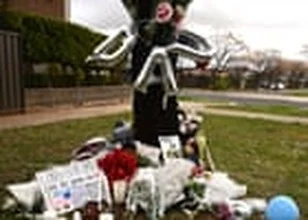
A year has passed since two boys, Chol Achiek, 12, and Dau Akueng, 15, were tragically murdered in Melbourne’s outer west. This devastating incident has left the Melbourne South Sudanese community in persistent fear, according to local leaders. They continue to grapple with a pervasive sense of insecurity following the alleged ambush of the boys.
The two South Sudanese Australian teenagers were returning home from a basketball tournament last September when a group of eight, reportedly armed with machetes and knives, attacked them. Police subsequently charged eight teenagers, aged 15 to 19, in connection with the murders. The legal proceedings are still ongoing.
Following the deaths, the then Victorian Premier, Jacinta Allan, emphasized that solutions for violent crime must originate within communities. She convened the government’s South Sudanese Australian Youth Justice Expert Working Group (SSAYJEWG) to gather direct input. However, the report from this group, delivered over eight months ago, remains unpublished by the government.
This report includes critical recommendations aimed at enhancing community safety. It also seeks to reduce the over-representation of South Sudanese Australians in the youth justice system. Sources indicate the working group proposed several measures.
These proposals included urging Victoria Police and other agencies to target organised crime figures who exploit African Australian children. Furthermore, they suggested police publicly disclose stop-and-search data. Other recommendations focused on increasing early intervention programs in primary schools. The group also called for research into media portrayals of young African Australians. Additionally, they advocated for collaboration with the federal government to address barriers South Sudanese Australians face in obtaining citizenship and accurate identification.
Elbino Akueng, Dau’s father, expressed deep concern for both his family and the wider community. “It’s not just our family… it’s the entire community,” he stated, highlighting the prevailing sense of fear. He now drives his two younger daughters to school, refusing to let them walk alone as they once did with Dau.
The SSAYJEWG was established in 2022 to tackle the disproportionate number of South Sudanese Australian youth in Victoria’s justice system. The group’s chair, Dr Santino Deng, and deputy chair, Meena Singh, previously affirmed their report would offer “systemic recommendations to create long-term positive change.” They stressed the importance of unity among families, elders, and government bodies to address disadvantage.
In January, Dr. Deng confirmed via LinkedIn that the report had been submitted to the then youth justice minister. Ros Spence now holds this portfolio. A community leader, speaking anonymously, described the extensive effort invested in the report. They urged the government to sustain engagement and adequately fund community organisations to implement the reforms.
A Victorian government spokesperson conveyed condolences to the families, stating the tragedy “should never have happened.” The spokesperson added that the government is collaborating with the working group to develop local solutions. Nevertheless, they did not provide a publication date for the report. The opposition’s police and corrections spokesperson, Brad Battin, criticized the delay. He argued that waiting a year for action only amplifies the Melbourne South Sudanese community fear.