Australia’s valuable heritage buildings are facing an existential threat due to a critical heritage stonemason shortage. A significant lack of specialized craftspeople jeopardizes the preservation of these historic structures nationwide. Many highly experienced artisans are nearing retirement, however, a new generation is not emerging quickly enough to fill the void.
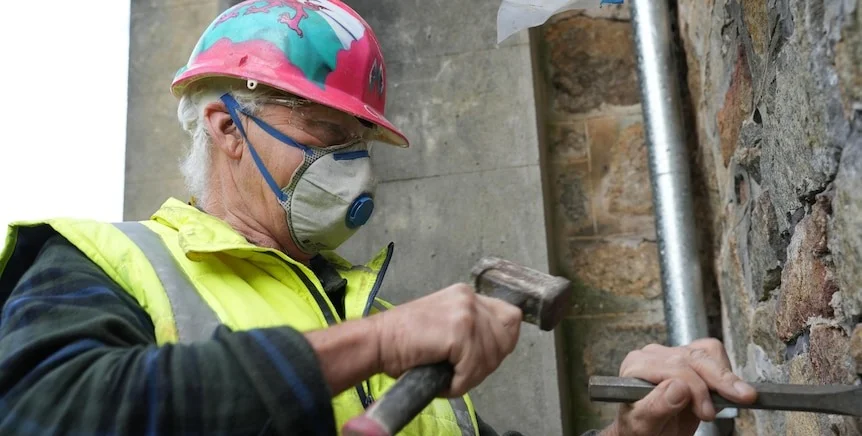
Currently, Duncan Moon is meticulously restoring Albany’s Scots Church. This over 130-year-old landmark was constructed in 1892 using local granite and lime mortar. Mr. Moon, who emigrated from Wales in 1983, has dedicated nearly four decades to heritage stonemasonry. His first project involved the old jail in Mount Barker.
Despite nearing his own retirement, Mr. Moon finds it difficult to step away. His phone “keeps ringing,” he states, highlighting the dire lack of skilled specialists. He deeply hopes younger workers will develop a similar passion and expertise before he finally retires.
The craft demands specific abilities, far beyond general construction. Heritage stonemasons require proficiency in intricate mouldings for ornamental features. Furthermore, they must master tuck-pointing, a precise technique for repairing and replacing crumbling mortar. Traditional hand tools, such as chisels and mallets, remain essential for authentic restoration work.
Albany historian Malcolm Traill underscores the immense value of Australia’s built heritage. The nation boasts over 100,000 heritage-listed buildings. These structures offer a unique window into society’s evolution, revealing past ways of life and architectural styles. Mr. Traill warns that without urgent action to address the heritage stonemason shortage, this tangible history will simply crumble.
Buildings over a century old survive solely through consistent maintenance. If neglected, they will decay and deteriorate rapidly. Bringing a failed building back to its original condition becomes incredibly expensive. Therefore, preserving these skills is paramount.
Only around 5,000 stonemasons operate in Australia generally. A far smaller number possess the specialized skills needed for heritage work. Yolanda Cool, CEO of the Heritage Skills Association, is racing against time to bridge this widening gap. She notes the absence of formal heritage trade certifications, except for a specific Cert III in South Australia. The association advocates for a project-based, intergenerational training model.
Western Australia alone hosts nearly 20,000 heritage-listed buildings. Ms. Cool explains that without adequate skills, demolition and replacement with modern materials often seem cheaper. However, this leads to an irreversible loss of history. More traditional trade courses are therefore vital.
Evan Zlnay represents the new wave of heritage stonemasons. In his 20s, he began his career at TAFE before securing a specialized restoration apprenticeship with Colgan Industries. He emphasizes the invaluable “tips and tricks” learned from experienced older colleagues. Acquiring these complex skills truly takes time, he says.
Mr. Zlnay highlights the profound satisfaction derived from his work. He helps restore “old things that you don’t want to fall over,” making them look rejuvenated yet authentic. He has worked on significant sites across Western Australia, including Rottnest Island. However, he believes more awareness is crucial. Many young people are simply unaware that heritage stonemasonry is a viable career option, often preferring trades like plumbing or electrical work.